Creativity gets chaotic: chaos energy is Primordial Mother feminine energy of process. Our creativity comes from intuition and inspiration and neither can be controlled – this is how I give myself space for the chaos, by producing mantras and meditation energy medicine tracks for chanting, movement meditation, podcasts and videos: all intended to raise our vibrations . . . awakening to Divine Feminine process.
.
AUM | This is the teaching and the practice of the sound which makes up the OM Mantra: A U M. I teach you the breathing and sounds and then we practice the chanting of the Mantra. Mantra is one of our gateways to Consciousness, with the vibration harmonising us with the Universe.
.
Voice of SuZen Meditation Medicine | A U M OM Mantra Chanting | Teaching and Practice
Voice of SuZen Meditation Medicine
The symbol OM represents Humanity’s realisation of Divinity within the Self. A U M is the feminine inner process of our spiritual embodiment in the chanting vibration. Powerful practice at all times – and especially at the end of New Moon Phase and just before the First Quarter phase when we’re more open to settling into our awareness of new seeds of inspiration for our creativity and renewal.
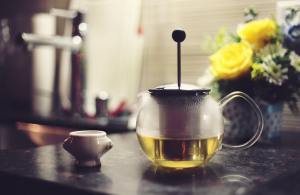
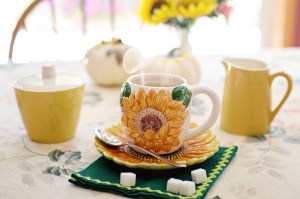
Friday tea time and time to take time out for our de-stressing tea-way ritual. This week I’m continuing the focus on Yellow Tea: and here’s my guidance for your contemplation . . . “yellow” in its energy connects us at our solar plexus chakra, giving us a culture of awareness of energetic birthing into connectedness with Planet and Nature. Let’s discover a couple of wonderful China Yellow Tea types . . . a little hard to find but worth it!
.
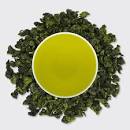
Meng Ding Huang Ya
Leaves for this yellow tea are cultivated along Mount Meng in Sichuan Province [yes, the origin of well know Sichuan-style Chinese cooking.] The tea type is one of the ancient Chinese teas and has been drunk and cultivated since the reign of the Han Dynasty [ 206 bce – 220 ce]. This type of Yellow Tea gives of a nature of nuttiness in flavor and with mild notes of grass!!
.
Mo Gang Huang Ya
This is another yellow tea grown at high elevations in the Zhejiang Province. The yellow tea leaves are cultivated on the slopes of Mount Mo Gan Shan, which has a unique microclimate that deepens the flavor of the tea. The area is rife with mountain springs, foggy mornings, and cool weather patterns: think of all that Yin water-nature-energy. The territory in the region results in a unique yellow tea that has a lightly sweet flavor, lingering aftertaste, and brews into a color similar to plump apricots: delicious.
.
Yellow Tea – refresher
Yellow tea is produced similarly to White Tea and Green Tea although an additional step is added. This extra step produces a tea that brews into a golden hue and features a mellow flavor without grassy notes. When you learn more about the basics of Yellow Tea, you can unearth some of the best types on the Planet. This is the process:
The leaves are harvested in early spring and immediately dried using direct sunlight or gentle pan-firing. Once dry, the leaves are wrapped in wet paper or cloth to induce a mild oxidation process through steaming. The yellow tea leaves are oxidized for up to three days and may undergo additional firing or drying rounds. This tea processing method produces a yellowing effect on the tea leaves. [Read more in my blog here]
As usual, I encourage you to inform yourself and if you’re instinctively drawn to a tea like Yellow Tea for your mind-body-spirit then gen up as much as you can with self-education. Learn more about our Zen Tea-way in my blog.
I left the Wednesday slot on the Blog free purposefully, intuitively wanting to know what would “flow in”. Wisdom is what seems to want to flow . . . but maybe not every Wednesday, so maybe there’ll be a blog or post of some kind, and maybe not. As long as the inspiration keeps coming, I’ll keep going with it.
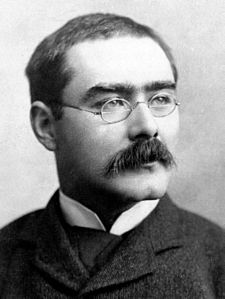
This series of inspirations is a new way of distilling wisdom and passing it onto you . . . “Voice of Men”. This week Rudyard Kipling is the voice of men’s Wisdom, and his writing “If” written for his son and showing him the way to mature manhood .
.
“If” [You’ll be a man my son] | Joseph Rudyard Kipling
.
Henry James: “Kipling strikes me personally as the most complete man of genius, as distinct from fine intelligence, that I have ever known.”
Joseph Rudyard Kipling was an English journalist, short-story writer, poet, and novelist. He was born in India, which inspired much of his work. [b. December 30 1865 – d. January 18 1936]
.
If you can keep your head when all about you
Are losing theirs and blaming it on you,
If you can trust yourself when all men doubt you,
But make allowance for their doubting too;
If you can wait and not be tired by waiting,
Or being lied about, don’t deal in lies,
Or being hated, don’t give way to hating,
And yet don’t look too good, nor talk too wise:
If you can dream—and not make dreams your master;
If you can think—and not make thoughts your aim;
If you can meet with Triumph and Disaster
And treat those two impostors just the same;
If you can bear to hear the truth you’ve spoken
Twisted by knaves to make a trap for fools,
Or watch the things you gave your life to, broken,
And stoop and build ’em up with worn-out tools:
If you can make one heap of all your winnings
And risk it on one turn of pitch-and-toss,
And lose, and start again at your beginnings
And never breathe a word about your loss;
If you can force your heart and nerve and sinew
To serve your turn long after they are gone,
And so hold on when there is nothing in you
Except the Will which says to them: ‘Hold on!’
If you can talk with crowds and keep your virtue,
Or walk with Kings—nor lose the common touch,
If neither foes nor loving friends can hurt you,
If all men count with you, but none too much;
If you can fill the unforgiving minute
With sixty seconds’ worth of distance run,
Yours is the Earth and everything that’s in it,
And—which is more—you’ll be a Man, my son!
. . . . Video narrated by Tom O’ Bedlam.
.
Rudyard Kipling wrote this poem for his son John, who was enlisted and died in war service. Years later, Kipling received a parcel from France of his book “Kim” which was ridden by a bullet hole. When he read the letter it came with, it explained that his book saved the life of the person who sent him the package. As a sign of gratitude, that French soldier named his newborn son, Jean, in honor of Kipling’s dead son – he also made Kipling Jean’s Godfather.
Modern living requires us being involved in a ceaseless cacophony of traffic, cell phone rings, email bleeps, buzzers and blares. We’ve become unwitting receptors for pollution!
The noise pollution that fills our daily lives can be washed away with a regular practice which restores wellbeing by stepping away from the stimulation, and its resulting emotions of anger, fear and anxiety, and allowing the spirit to heal.
.
Emptiness is the Sound of Silence
Though it may seem to be counter-intuitive [not what you think it might be], emptiness, as in the sound of silence, can be exactly the element that fills our hearts and minds. Whether through meditation, yoga, or a quiet time spent in a garden, silence can heal the spirit from the onslaught of the daily barrage of sound, stimulation and demands.
The effect of noise on our bodies is stimulation: constant noise brings relentless stimulation. The physical response to noise can negatively affect many systems in our bodies: blood vessels constrict, adrenal glands work overtime, the water we are made of vibrates. Many people find themselves exhausted before their day even begins because their bodies never truly rest.
.
Create Sacred Moments
So, as an ordering process [like daily practice], to bring ourselves back to balance we need to create sacred moments – they become an antidote to the daily onslaught. Every one of us, of course, will have a different go-to-recipe for silence that’ll calm our nerves: and open the door to our Bliss Nature.
The Zen practice of meditation teaches us to let go of thoughts and feelings, distractions and demands. Even a few minutes a day can greatly benefit peace of mind. Others of you might find a connection to nature by relaxing in a garden or at the beach, listening to the soothing rhythms of nature: in Japan it’s called “Nature Therapy”!
.
Returning the Self to Simple Being
Yoga relaxes the body and releases toxins with simple, slow stretches. Zen teaches us stillness in tranquility and silence. Each of these methods returns the self to a simple sense of being that lasts for hours beyond the minutes we spend in the space provided in their moments.
“Unplugging” from the modern lifestyle can be the antidote to what ails your soul, so start looking for your form of emptiness and reap the rewards in as little as ten minutes a day.
“Emptiness which is conceptually liable to be mistaken for sheer nothingness is in fact the reservoir of infinite possibilities.” D.T. Suzuki (author of “An Introduction to Zen Buddhism”)
Namaste, SuZen
Image: Gray White Abstract by Elena Ray [Twitter @OldChineseMan]
.
Here’s a Refresher on “thrive” . . .
When you think “thrive”, think of all the seemingly small, but necessary daily elements of life as nourishing the miraculous organ you are as a human being. At our essence we are a living organism, on a living Planet, in a living Universe. So, here’s something else I’ve been teaching this for over 20 years : the miracle of our self as an organism, and how we help it maintain balance [or some kind order in the chaos of living]: silence is essential – the teaching never changes, results of practice are always the same . . .
All we are on a physical level as a human being is air, water and food. And physically, our body’s 10-13 trillion cells replace themselves every 100 days [just over 3 months]. How about that for a “slow flow”? And how do we help our organism to replace and renew?
.
.
Why we do what we do to thrive: learning to be “you”
I’m a teacher, so repeating myself goes with the job! Small steps, small changes . . . one day at a time: in 100 days from now you’ll be a new you! I’ve said this to you before, I’m sure there’ll be many tellings again. [ Read more about this in my blog . . . thrive | Rest and Relaxation #1 ]
And, so, let’s talk about repetition and commitment as well as practicalities and practices: we could take the attitude of “What’s the point in showering we’re only going to get dirty again?” or “Why bother washing up when we’re only going have to redo it when we reuse the dishes.” Come to think of it, what’s the point in eating, when we’ll be hungry in a few hours time? And of course, sleeping’s unnecessary, too . . . we just always end up feeling tired again, don’t we? I don’t think I need to say anymore, do I? Some things in life just need to be repeated: and diligently.





 Meng Ding Huang Ya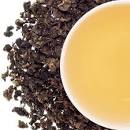

 As usual, I encourage you to inform yourself and if you’re instinctively drawn to a tea like Yellow Tea for your mind-body-spirit then gen up as much as you can with self-education.
  I left the Wednesday slot on the Blog free purposefully, intuitively wanting to know what would “flow in”. Wisdom is what seems to want to flow . . . but maybe not every Wednesday, so maybe there’ll be a blog or post of some kind, and maybe not. As long as the inspiration keeps coming, I’ll keep going with it.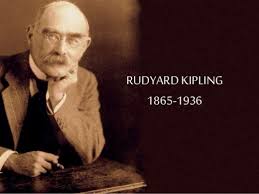
 “Balance is what happens when you know in your heart something is right.”
 Modern living requires us being involved in a ceaseless cacophony of traffic, cell phone rings, email bleeps, buzzers and blares. We’ve become unwitting receptors for pollution!
 And, so, let’s talk about repetition and commitment as well as practicalities and practices: we could take the attitude of “What’s the point in showering we’re only going to get dirty again?” or “Why bother washing up when we’re only going have to redo it when we reuse the dishes.” Come to think of it, what’s the point in eating, when we’ll be hungry in a few hours time? And of course, sleeping’s unnecessary, too . . . we just always end up feeling tired again, don’t we? I don’t think I need to say anymore, do I? Some things in life just need to be repeated: and diligently.
 SuZen YinZen